
Social Lifestyle
Swing, LLCSocial
2.540.00 Reviews
- Version
- 9.1.03
- Installs
- 10.00K
- Age Rating
- Mature 17+
Screenshots
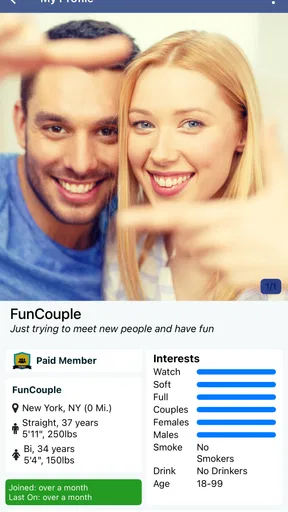
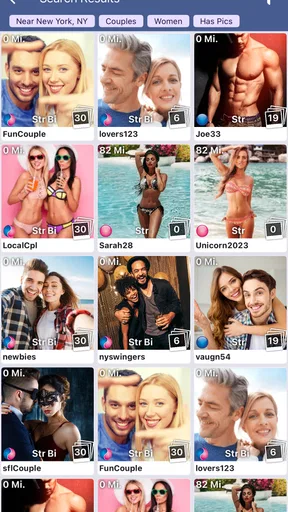
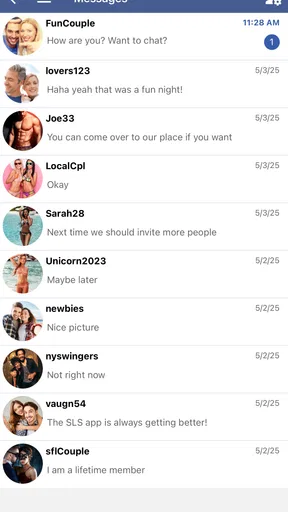
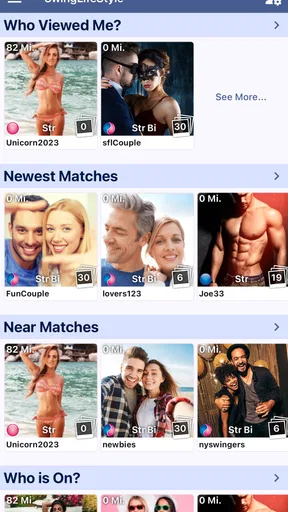
Our Review of Social Lifestyle
 Analysis by Appyee
Finding people who share a particular lifestyle can be harder than finding people who share a hobby. That is the space Social Lifestyle, usually presented as SLS, tries to occupy. Developed by Swing, LLC, this free social app is aimed at adults looking for lifestyle friends rather than a general-purpose feed, a conventional dating service, or a large public discussion network. I found its central idea appealing because it gives social discovery a clearer purpose: instead of hoping the right people appear in an ordinary social timeline, you begin with a shared interest in a particular way of living.
That focus also creates the app’s biggest challenge. A specialized community is only as useful as the people active in it, and a smaller network can feel quiet compared with mainstream social platforms. SLS has an average rating of 2.5 from around sixty ratings and roughly forty written reviews, with over ten thousand installs. Those figures suggest a developing service rather than an established social giant, so I would approach it with realistic expectations. It may be worthwhile if you specifically want lifestyle-oriented connections, but it is not the obvious choice for someone who simply wants the busiest possible social network.
Why the lifestyle-friend focus matters
The most important capability here is not just messaging or profile browsing. It is the attempt to make shared lifestyle context the starting point for meeting people. That distinction matters in everyday use. On a broad social platform, you may need to explain your interests repeatedly, filter through unrelated posts, or decide whether a new contact will understand the kind of friendship you want. A focused service can reduce that initial awkwardness.
I see SLS as closer to a social discovery tool than a normal status-sharing app. The useful question is not “How many people can I follow?” but “Can I find people with whom I can comfortably discuss this part of my life?” That makes it potentially valuable for adults who feel underserved by ordinary social apps. It may also help people who have moved to a new area, changed their social circle, or want connections that are more specific than casual online conversation.
The mature audience is important. The app carries a Mature 17+ age rating, which signals that it is intended for adults and that its subject matter should be approached with adult judgment. That does not automatically make every interaction trustworthy or suitable, however. I would still treat a new contact as a stranger, avoid sharing sensitive personal details too early, and move slowly before arranging any offline meeting.
What makes this capability different from a standard dating app is the stated emphasis on lifestyle friends. Dating services usually push users toward romantic intent, while general social networks often leave the purpose of a connection vague. SLS sits between those models. That can be a strength for someone seeking community without wanting every interaction interpreted as a date. It can also be a weakness if you expect a highly structured dating experience, detailed compatibility tools, or a very large pool of nearby users.
Using the app without treating it like a popularity contest
My first practical recommendation is to write a profile that explains what kind of connection you actually want. A vague line about being open to meeting people gives others very little to work with. A clearer description of your boundaries, preferred conversation style, and whether you are looking for local friendships or online discussion gives the app’s main capability a better chance to work.
This is one of the less obvious trade-offs of a niche social platform: your profile needs more care than it might on a casual network. In a large app, a weak profile can sometimes be rescued by volume. In SLS, clarity is more useful than trying to appear universally appealing. I would describe the lifestyle interests I am comfortable discussing, the kinds of activities that might lead to friendship, and the pace at which I prefer to get to know someone.
I would also separate curiosity from commitment. A person can be interested in a lifestyle community without being ready to meet anyone in person. Treating the app as a place to learn, observe conversations, and identify compatible personalities first is sensible. That approach reduces pressure and helps reveal whether someone respects boundaries rather than merely saying the right things in an opening message.
Because the app is free to install, it is relatively easy to test whether its community suits you before deciding whether it deserves regular attention. The important test is not how quickly you can create an account, but whether the people you encounter match your expectations. If the available conversations feel too limited, too local, or too different from what you want, no amount of profile editing will completely solve that mismatch.
What everyday use may look like
Imagine someone who has recently moved for work and wants friends who understand a particular adult lifestyle. On a conventional network, they might join broad local groups, scroll through unrelated recommendations, and spend time explaining their interests before knowing whether a conversation is welcome. With SLS, the intended starting point is more direct: look for people who are already open to lifestyle-based social connections, read their presentation carefully, and begin with a respectful message that refers to a shared interest.
In that scenario, the app’s value is not necessarily instant friendship. Its value is reducing the amount of social guesswork at the beginning. The user can focus on compatibility of expectations instead of trying to identify it from a completely general profile. I would still move the conversation gradually: start with the shared interest, look for consistency, establish basic comfort, and only then consider a voice conversation or an in-person meeting through a safe plan.
A second useful scenario is a couple or an individual who already has an established social life but wants to meet people outside their usual circle. SLS may serve as a supplementary community rather than a replacement for existing friendships. That distinction is important. The app is more attractive when you want to expand a specific part of your social world, not when you expect it to provide every kind of connection in one place.
For someone who prefers private, low-pressure introductions, a focused network can be easier to navigate than a public feed. For someone who enjoys lively group discussion, constant updates, or broad-interest content, the narrower purpose may feel restrictive. The experience depends heavily on whether you value relevance over activity.
Practical habits that improve the experience
I would use a three-stage approach. First, make the profile specific enough to discourage obvious mismatches. Second, keep early conversations inside the app while checking whether the other person communicates respectfully. Third, if an offline meeting becomes appropriate, choose a public setting, tell someone you trust, and arrange independent transportation. These are not glamorous features, but they are the habits that matter most when a social app connects strangers around personal interests.
A useful writing trick is to state both an invitation and a boundary. For example, explain the kind of conversation you enjoy while making clear what you are not looking for. This can save time and make respectful users more comfortable approaching you. It also gives you an early signal: people who ignore a plainly stated boundary are unlikely to become good lifestyle friends.
I would avoid using the app only during moments of frustration or loneliness. Niche social discovery works better when you have enough patience to compare several conversations rather than attaching too much importance to the first promising contact. A slower approach is especially sensible when the subject matter is personal and the consequences of misunderstanding are higher.
Another practical trade-off is the balance between openness and privacy. Too little information makes it difficult for compatible people to recognize you. Too much information can expose details that should remain private until trust develops. I would mention interests and expectations, but not publish a home address, workplace details, financial information, or anything that would make it easy for a stranger to identify my routine.
Where the experience may fall short
The clearest limitation is the size and maturity of the community. The app has passed ten thousand installs, but it is still much smaller than mainstream social services. That may mean fewer suitable contacts in some areas and longer waits for meaningful conversations. A person living outside a large population center should be particularly prepared for a limited local selection.
The average rating of 2.5 is another reason to keep expectations measured. A rating is not a complete description of the experience, but it does suggest that the app will not satisfy everyone. I would not interpret it as proof that the concept fails; rather, it is a reminder to test the service personally and pay attention to how smoothly it fits your needs.
The free entry point is helpful, yet in-app purchases range from $24.99 to $199.99 per item. That is a substantial possible expense, so I would not pay for anything until I understood exactly what it adds to my experience and whether the community itself is active enough to justify spending. A paid option cannot manufacture compatible friendships if there are too few appropriate people available.
This is where SLS differs from a large general social network. Mainstream alternatives usually offer more people, more content, and more established discovery habits, but they also bring more noise and less shared context. A dating app may provide stronger matching around romance, while a local community platform may be better for neighborhood events or ordinary hobbies. SLS makes more sense when lifestyle compatibility is the priority and you are willing to accept a smaller, more specialized environment.
I would also skip it if you want anonymous entertainment, rapid-fire content, or a platform built around public broadcasting. Its purpose is more personal and intentional. Likewise, if you are uncomfortable with the mature subject matter implied by its age rating, a general social app would be a better fit. The app should not be treated as a universal social replacement.
Technical details and the cost of trying it
SLS is available as a free app for devices running Android 6.0 or later. The current version is 9.1.03, and the developer is Swing, LLC. Those details make it accessible to people using older compatible Android devices, although actual comfort will still depend on the phone and the quality of the local community rather than compatibility alone.
I would begin with the free experience and use it as a short evaluation period. Look for three things: whether profiles communicate clear expectations, whether conversations receive thoughtful replies, and whether the people you meet are relevant to the kind of friendship you want. If all three are weak, spending money is unlikely to improve the fundamental fit.
The possible purchase range deserves deliberate attention because the upper end is not an impulse decision. Before paying, I would identify the exact problem the purchase is meant to solve and ask whether that problem is caused by a missing tool or by a small community. If it is the latter, keeping the app free is the wiser choice. The service’s basic promise can be evaluated without immediately committing to its most expensive options.
Installation itself is not the real decision. The real decision is whether you are comfortable placing a personal lifestyle interest at the center of a social profile. People who can answer yes, communicate boundaries, and accept a slower discovery process are more likely to get value from it. People who want instant results may become disappointed even if the app is functioning as intended.
Who is most likely to benefit
I think SLS is best suited to adults who want lifestyle-based friendships and are tired of explaining their interests on broad platforms. It may be especially useful for someone rebuilding a social circle, exploring a new community carefully, or looking for conversations that begin with a shared understanding rather than a random recommendation.
It is less suitable for users who need a dense local network immediately, want romantic matching as the main purpose, or prefer a polished mainstream platform with a large flow of content. In those cases, a specialized app may feel empty or too narrow. I would also recommend avoiding it if you are looking for guaranteed anonymity or if you are not prepared to manage personal boundaries with strangers.
My overall view is cautiously positive. The idea behind Social Lifestyle is more focused than ordinary social networking, and that focus can remove some of the uncertainty involved in meeting people around personal interests. At the same time, the relatively small reach, modest average rating, mature audience, and potentially high in-app purchase range mean that this is an app to explore thoughtfully, not a service I would recommend blindly to everyone.
If I were suggesting it to a friend, I would say: install it only if the lifestyle-friend angle is genuinely what you need, create a precise profile, take conversations slowly, and judge the community before considering any purchase. The strongest reason to try SLS is relevance, not scale. When that relevance matches your situation, the app can provide a more comfortable starting point than a generic network. When it does not, a larger social platform or a more clearly purpose-built alternative will probably serve you better.
Verdict
Strengths of Social Lifestyle
- Helps users discover nearby events, groups, and lifestyle activities.
- Makes it easy to connect with people who share similar interests.
- Personalized suggestions can make local content more relevant.
- Useful tools for sharing updates, photos, and everyday experiences.
- Regular notifications help users stay informed about new activities.
Limitations of Social Lifestyle
- Some features may require creating a detailed personal profile.
- Location-based suggestions can raise privacy concerns for some users.
- The experience may feel less useful in areas with few active members.
- Frequent notifications can become distracting without careful settings.
- Content quality may vary depending on the activity of the community.
Similar Picks in This Category
View All
Meta Platforms, Inc.4.6

Instagram4.0

Likee-Live, Chat & Party Games
Likeme Pte. Ltd.4.4

Facebook Lite
Meta Platforms, Inc.4.5

TikTok - Videos, Shop & LIVE
TikTok Pte. Ltd.4.0

Moj: Free Short Drama & Reels
ShareChat4.1
Frequently Asked Questions
What is Social Lifestyle, and what can I use it for?
Social Lifestyle is designed to help users discover, organize, and engage with lifestyle-related content and communities. Depending on the features available in your version, you may be able to explore interests, follow people or topics, share updates, and interact with other users. It is best suited to people who want one place for social discovery, inspiration, and everyday lifestyle conversations.
Is Social Lifestyle free to download and use?
The application may be available to download at no initial cost, but some features can depend on optional purchases, subscriptions, advertising, or account-based services. Before downloading, check the current Google Play Store or Apple App Store listing for pricing details. Also review any subscription terms carefully, especially renewal conditions, trial periods, and whether certain content or tools require payment.
Do I need to create an account to use Social Lifestyle?
An account may be required for interactive features such as creating a profile, following users, saving content, posting updates, or participating in discussions. Some versions may allow limited browsing without registration, but signing in usually provides a more personalized experience. When registering, use a strong password and avoid sharing unnecessary personal information in your public profile.
How does Social Lifestyle handle privacy and user safety?
Because Social Lifestyle may involve profiles, posts, messages, or shared interests, users should review its privacy policy and permission requests before using it regularly. Check what information is collected, how it is used, and whether content can be made private. Use available blocking and reporting tools, avoid sharing sensitive details, and be cautious when communicating with unfamiliar users.
Will Social Lifestyle work on my Android or iPhone?
Compatibility depends on the operating system, device model, and application version. Before installing, visit the official Google Play Store or Apple App Store page to confirm the required Android or iOS version, storage needs, and regional availability. Keeping your device and the app updated can improve performance, security, and access to the latest social and lifestyle features.
